Introduction
You’re about to send money and three options pop up — NEFT, RTGS, IMPS. Which one do you tap? Most people just guess, and honestly, it usually works out fine. But knowing the difference between NEFT vs RTGS can actually save you money and time, especially for larger transfers. Let’s break it down properly.
The Quick Difference
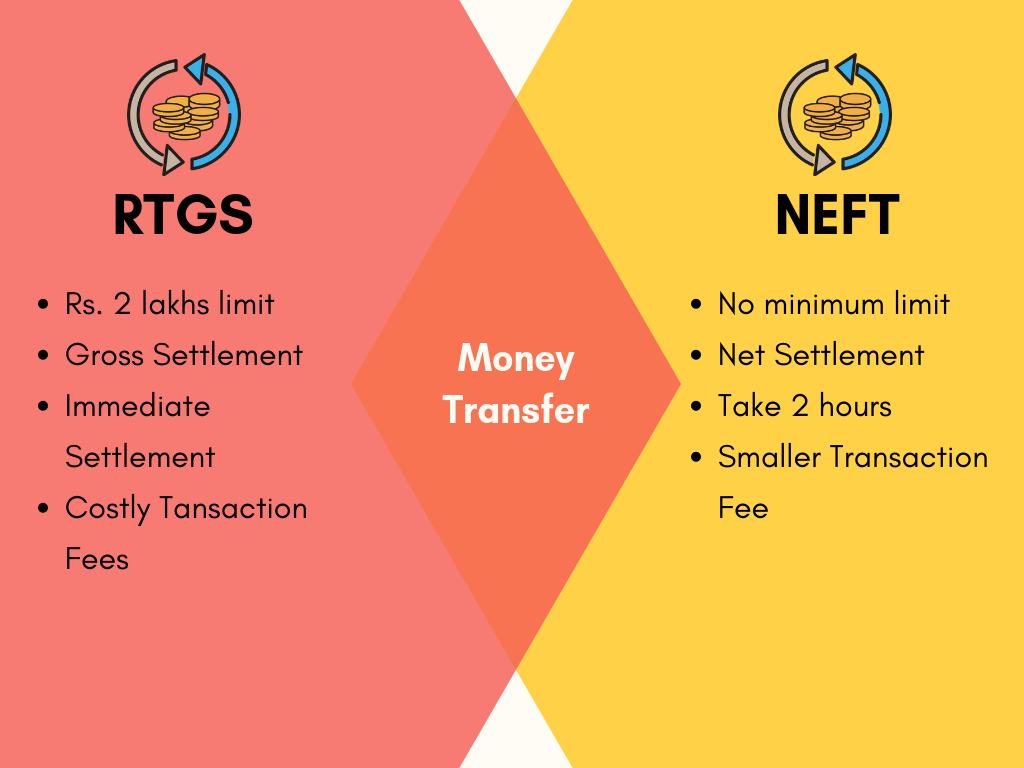
NEFT vs RTGS comes down to amount and speed: NEFT works for any amount and settles in batches within 30 minutes, while RTGS is for transfers above ₹2 lakh and settles almost instantly, one transaction at a time.
IMPS sits in between — instant, works round the clock, but usually capped around ₹5 lakh depending on the bank.
NEFT: National Electronic Funds Transfer
NEFT used to work in half-hourly batches, but since RBI made it 24×7, it’s genuinely become reliable for everyday use. There’s no minimum or maximum limit set by RBI, though your bank might set its own cap. It’s ideal for salary payments, vendor payments, or anything that doesn’t need to land instantly.
I’ll be honest — I still default to NEFT for most of my transfers unless I need the money to reach someone right this second. It’s cheaper, and the “batch” delay rarely matters in daily life.
RTGS: Real Time Gross Settlement
RTGS is built for big-ticket transfers — think property deals, business payments, or anything above ₹2 lakh. Each transaction is settled individually and instantly, which is why banks reserve it for larger amounts. It’s also generally available 24×7 now across most banks.
Charges for RTGS tend to be higher than NEFT, sometimes ₹25-50 per transaction depending on the amount slab.
IMPS: Immediate Payment Service
IMPS is what most UPI apps use under the hood for bank-to-bank transfers outside UPI. It works instantly, any time of day, including Sundays and holidays. The catch — transaction limits are usually lower, often ₹2-5 lakh depending on your bank and account type.
Picture this: it’s 11 PM on a Sunday and you need to send your friend money urgently. NEFT and RTGS technically work too now, but IMPS has always felt the most “built for this” scenario.
Comparing Charges
- NEFT: Usually free for online transfers, small fee for branch transfers
- RTGS: ₹25-50 typically, varies by bank and amount
- IMPS: ₹5-15 per transaction, sometimes free up to certain limits
Charges vary a lot bank to bank, so it’s worth checking your specific bank’s schedule before assuming.
Which One Should You Actually Use
For daily transfers under ₹2 lakh, NEFT or IMPS both work fine — IMPS if you need it instantly, NEFT if you can wait a few minutes. For anything above ₹2 lakh where speed matters, RTGS is your only real option.
[link to related guide on UPI transaction limits 2026 here]
If speed isn’t urgent, NEFT saves you money. If it’s urgent and under the limit, IMPS. If it’s a large amount and needs to move now, RTGS is the way.
FAQs
Is NEFT free for all banks? Most banks don’t charge for online NEFT transfers initiated through net banking or apps, though branch transfers may have small fees.
Can I do RTGS for less than ₹2 lakh? No, RTGS has a minimum limit of ₹2 lakh set by RBI.
Does IMPS work on bank holidays? Yes, IMPS operates 24×7, including holidays and weekends.
Which is faster, RTGS or IMPS? Both are near-instant, but RTGS is meant for larger transactions and IMPS for smaller, faster day-to-day transfers.
Can I reverse an NEFT or RTGS transaction? Generally no, once processed. Contact your bank immediately if there’s an error — resolution isn’t guaranteed.
Conclusion
At the end of the day, picking between NEFT vs RTGS and IMPS isn’t complicated once you know the basics — amount, urgency, and cost. For most everyday transfers, NEFT and IMPS will cover you fine. Save RTGS for the big transactions where speed genuinely matters. Next time that transfer screen pops up, you’ll know exactly which button to hit.